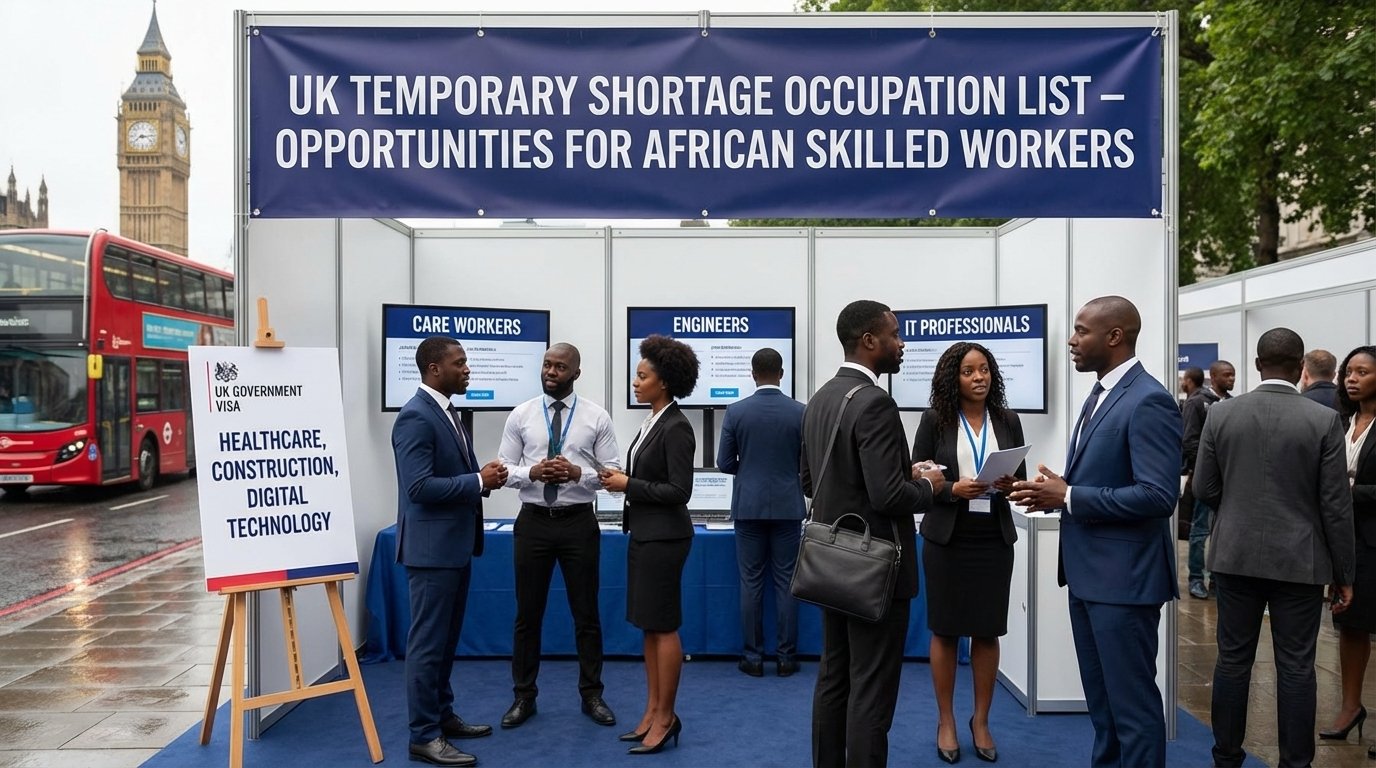
UK Temporary Shortage List Jobs (Complete TSL Visa Guide 2026)
For three years, the UK has been slamming doors on foreign workers—raising salary thresholds, cutting visa routes, and basically telling the world “thanks, but no thanks.” But here’s what they’re not shouting from the rooftops: they just quietly opened a backdoor for workers WITHOUT university degrees, and it’s perfect for skilled Africans with trade certificates, diplomas, or practical experience.
Imagine this: You’re a plumber in Lagos, an electrician in Nairobi, or a photographer in Johannesburg. No degree, but solid skills. The UK just announced you could qualify for a 3-5 year work visa through their new Temporary Shortage List (TSL), announced in October 2025 by the Migration Advisory Committee. We’re talking about 82 specific jobs where the UK desperately needs workers and can’t find enough locals.
This guide breaks down everything: which jobs qualify, what you need to apply, expected salaries, and the strategic moves African workers should make to maximize this opportunity before the final list drops in July 2026.
Your Quick Path to Understanding This Game-Changing Visa
Let’s cut through the confusion. The UK’s Temporary Shortage List isn’t just another visa scheme—it’s the government admitting they need foreign workers for jobs that don’t require university degrees. After years of tightening immigration, labor shortages are forcing their hand.
Here’s what makes this different: Previously, the UK’s Skilled Worker visa required jobs at RQF Level 6 (basically degree-level positions). Now, they’re accepting RQF Levels 3-5—that’s A-levels, trade certificates, and diplomas. For African workers with technical skills but no university degree, this is your golden ticket.
The timeline is crucial. The government published their white paper in May 2025, introduced interim rules in July, and the Migration Advisory Committee shortlisted 82 occupations in October. The final list comes July 2026. That means you have a window RIGHT NOW to position yourself for these opportunities while employers are desperately trying to fill gaps.
What’s driving this? The UK economy is struggling. Brexit and pandemic-driven labor shortages have left critical sectors without workers. Construction sites are delayed, restaurants can’t find chefs, and logistics companies need supervisors. They need you, whether they want to admit it publicly or not.
The 82 Golden Opportunities: Jobs That Don’t Need University Degrees
Construction and Trades (Your Strongest Entry Point)
The construction sector dominates this list, and for good reason—the UK has massive infrastructure projects but not enough hands to build them. Here are the standout opportunities:
High-Demand Trades:
- Bricklayers and masons: £18-25 per hour
- Plumbers and heating engineers: £20-30 per hour
- Carpenters and joiners: £18-28 per hour
- Welders and fabricators: £22-35 per hour
- Roofers and tilers: £18-25 per hour
- Plasterers: £20-28 per hour
- Electricians: £25-35 per hour
African workers with trade certifications from polytechnics or technical colleges are perfectly positioned. Your Nigerian NABTEB certificate, Kenyan KNEC diploma, or South African TVET qualification could be your ticket. The MAC specifically identified these roles as crucial to Britain’s industrial strategy.
Technical and Administrative Roles
Beyond construction, there’s a surprising range of mid-skilled technical positions:
Laboratory and Engineering Technicians:
- Laboratory technicians (healthcare, research): £18-25 per hour
- Engineering technicians (civil, mechanical): £20-28 per hour
- Electrical and electronics technicians: £22-30 per hour
- Building and civil engineering technicians: £20-26 per hour
Business and Administrative:
- Bookkeepers and payroll managers: £15-22 per hour
- HR officers and managers: £18-25 per hour
- Health and safety officers: £20-28 per hour
- Logistics managers and coordinators: £18-25 per hour
These roles often accept equivalent experience. If you’ve been working in a Nigerian bank, Ghanaian manufacturing firm, or South African tech company, your practical experience matters more than formal qualifications.
Creative and Service Industries
Here’s where it gets interesting—the UK is also opening doors for creative professionals:
- Photographers and camera operators: £15-30 per hour
- Fashion designers and garment technicians: £18-25 per hour
- Dancers and choreographers: £20-35 per hour
- Musicians and music directors: £25-40 per hour
- Writers and editors: £20-30 per hour
For Africa’s creative economy, this is huge. Your portfolio matters more than your degree. Lagos fashion designers, Johannesburg photographers, and Nairobi content creators—this is your moment.
Key Takeaway Box: 🎯 Top 10 TSL Jobs for African Applicants:
- Electricians (highest pay, constant demand)
- Plumbers (housing crisis = job security)
- Welders (infrastructure projects)
- Laboratory technicians (NHS and research)
- Bookkeepers (every business needs one)
- Carpenters (construction boom)
- IT support technicians (digital economy)
- Logistics coordinators (post-Brexit gaps)
- Chefs (hospitality recovery)
- Health and safety officers (compliance needs)
What Makes This Different from Previous UK Visas
Lower Education Requirements (RQF 3-5 vs RQF 6)
Let’s decode this education jargon. According to immigration guidance, RQF (Regulated Qualifications Framework) levels determine what qualifications you need:
Old System (RQF 6): Bachelor’s degree required New TSL (RQF 3-5):
- RQF 3: A-levels, BTEC Nationals (2 years post-secondary)
- RQF 4: Higher National Certificates, first-year degree equivalent
- RQF 5: Higher National Diplomas, foundation degrees
Translation for African qualifications:
- Your polytechnic diploma qualifies
- Trade certificates from technical colleges work
- Professional certifications (CISCO, Microsoft, AWS) count
- Years of experience can substitute for formal education
This shift opens doors for millions of skilled Africans who learned through apprenticeships, vocational training, or on-the-job experience rather than university.
The Catch: No Settlement Path (Yet)
Here’s the reality check—this isn’t a permanent immigration route. The government has made it clear this is a temporary measure:
Current Limitations:
- 3-5 year visa maximum
- No automatic path to settlement (ILR)
- Cannot bring dependants (spouse/children) on new applications
- Must maintain employment in TSL-listed occupation
- Limited ability to change employers
But here’s the strategic angle: You can potentially switch to the standard Skilled Worker route if you:
- Gain UK experience and qualifications
- Find an employer willing to sponsor at RQF 6 level
- Meet higher salary thresholds (£38,700+)
- Build UK professional networks
Think of TSL as your foot in the door, not your final destination. Use those 3-5 years to upskill, network, and position yourself for permanent opportunities.
Key Takeaway Box: ✅ TSL Visa Pros:
- No degree required
- 3-5 year validity
- Lower salary thresholds than skilled worker
- Access to UK job market
- Potential stepping stone to other visas
❌ TSL Visa Cons:
- No settlement path currently
- Cannot bring family (initially)
- Tied to specific occupations
- Temporary by design
- Must prove domestic recruitment efforts
Your Step-by-Step Application Roadmap
Essential Requirements for African Applicants
Based on MAC recommendations and Home Office requirements, here’s what you’ll need:
English Language:
- Minimum B1 level (intermediate)
- IELTS: Overall 4.0 (4.0 in each component)
- Alternative: Degree taught in English
- Some roles may require B2 (upper-intermediate)
Skills Documentation:
- Trade certificates from recognized institutions
- Professional licenses (where applicable)
- Employment letters confirming experience
- Portfolio of work (creative roles)
- References from previous employers
Background Checks:
- Police clearance certificate from home country
- TB test certificate (required for most African countries)
- Clean immigration history
- No serious criminal convictions
Financial Requirements:
- £1,270 in bank account for 28 days
- OR employer certification of maintenance
- Proof of accommodation arrangements
The Employer Sponsorship Process
Finding and securing sponsorship requires strategy:
Where to Find TSL Employers:
- UK government licensed sponsor list
- Industry-specific job boards
- UK recruitment agencies specializing in your sector
- LinkedIn (filter by UK + hiring + visa sponsorship)
- Direct applications to companies in labor shortage sectors
Understanding Jobs Plans: Employers must submit “Jobs Plans” showing they’re training UK workers. This means they need to prove:
- Genuine effort to recruit locally
- Investment in training programs
- Long-term strategy to reduce foreign worker dependence
- Your role fills an immediate critical gap
Salary Expectations: Unlike the old Shortage Occupation List, TSL doesn’t automatically give 20% salary discounts. You’ll earn:
- At least the occupation’s going rate
- Minimum £20,960 per year (£10.33/hour)
- Often higher in expensive areas (London, South East)
- Potential overtime and benefits
Key Takeaway Box: 📋 Document Checklist for African Applicants: ✅ Valid passport (6+ months validity) ✅ English test results (less than 2 years old) ✅ Educational certificates (authenticated) ✅ Trade qualifications or professional licenses ✅ Employment reference letters ✅ Police clearance certificate ✅ TB test certificate ✅ Bank statements (3-6 months) ✅ Accommodation proof or plans ✅ Certificate of Sponsorship (from employer)
Your Window of Opportunity Closes Soon
The UK is walking a tightrope—desperately needing workers while trying to appear tough on immigration. This Temporary Shortage List is their compromise, and it won’t last forever. The Migration Advisory Committee reviews the list in July 2026, and occupations can be removed without notice.
For African workers, this represents a rare opportunity. While the UK tightens rules for degree-holders with £38,700 salary requirements, they’re opening doors for skilled trades paying £20-30 per hour. That’s £41,600-62,400 annually—life-changing money that can transform your family’s future.
Your strategic move? Don’t wait for the “perfect” time. Start now: Get your English certification, gather your trade documents, build your portfolio. The smartest African workers are already positioning themselves. By the time the final list is published in July 2026, you want to be ready to submit applications, not starting to prepare.
Remember this: Every successful immigrant story started with someone taking action while others hesitated. The UK needs your skills—whether they publicly admit it or not. The construction sites need your hands, the hospitals need your technical expertise, and the creative industries need your fresh perspective.
This visa might be temporary, but the experience, connections, and opportunities you gain are permanent. Use it as your launching pad into the UK market, then write your own success story from there.
The door is open. Walk through it.